


 Deutsch
 English
 Español
 Français
 Nederlands
 Português


 Share
Share




The February 2026 Supreme Court ruling in Learning Resources, Inc. v. Trump represents the most consequential legal reshaping of U.S. trade authority in decades. In a landmark 6-3 decision, the Court struck down sweeping tariffs imposed under the International Emergency Economic Powers Act (IEEPA), forcing the administration to revert to narrower Tariff Act authorities with strict 150-day limits. This ruling has unleashed a cascade of strategic consequences: the European Union postponed its US trade deal vote, trade flows have diverted toward China and ASEAN, and global businesses now face a regime of unpredictable tariff cycles rather than stable protectionism. This article analyzes how the legal recalibration of US tariff power is accelerating deglobalization by creating structural uncertainty that undermines long-term investment planning and supply chain architecture.
The Supreme Court's Landmark Decision
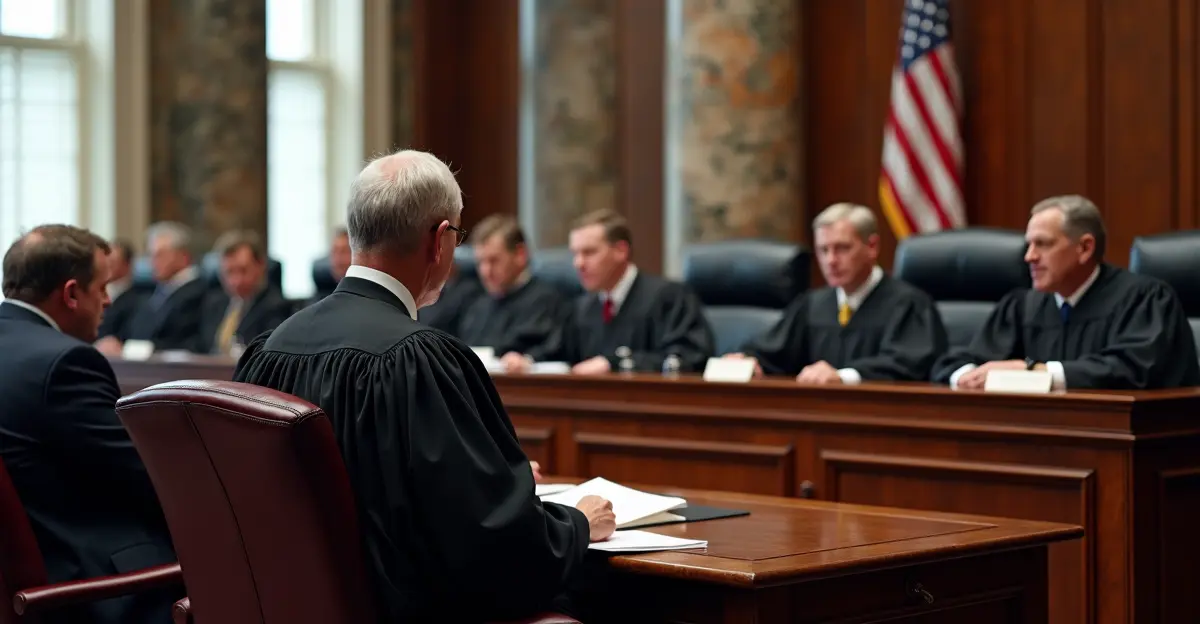
On February 20, 2026, Chief Justice John Roberts authored the opinion in Learning Resources, Inc. v. Trump, holding that IEEPA—a 1977 law designed to regulate commerce during national emergencies—contains "no reference to tariffs or duties" and therefore does not authorize the president to impose sweeping tariffs. A plurality of justices applied the major questions doctrine, which requires Congress to speak clearly when delegating powers of vast economic significance. The decision invalidated tariffs that had generated over $200 billion in duties throughout 2025. Justice Kavanaugh, in dissent, warned of potential economic uncertainty, including possible refund obligations and impacts on trade deals worth trillions of dollars.
The Court did not address refunds for the estimated $200+ billion already collected, but importers may seek refunds through administrative protests or court relief. According to informed estimates, up to $175 billion in tariffs could be refunded across 53 million entries. The ruling immediately vacated the IEEPA-based tariff framework, leaving a legal vacuum that the administration filled within hours.
Immediate Aftermath: The Section 122 Pivot
Hours after the Supreme Court ruling, President Trump invoked Section 122 of the Trade Act of 1974 to impose a temporary 10% ad valorem surcharge on virtually all imports, effective February 24 through July 24, 2026. Section 122 allows the president to impose tariffs of up to 15% for up to 150 days in response to "large and serious" balance-of-payments deficits. However, the statute requires uniform application—it cannot target individual countries—and any measures expire after 150 days unless Congress votes to extend them.
Exemptions include USMCA-qualifying goods from Canada and Mexico, goods in transit, and items already covered by Section 232 (steel, aluminum, autos) or Section 301 duties. The temporary surcharge creates a cliff-edge scenario: if Congress fails to act by July 24, 2026, the 10% tariff disappears overnight. As of mid-2026, Congress has not extended Section 122, and the USTR Section 301 replacement has taken effect instead, imposing a two-tier 10%/12.5% tariff covering roughly 60 economies.
EU-US Trade Deal Frozen
The European Parliament's International Trade Committee immediately put legislative work on the EU-US trade deal—the so-called Turnberry Deal—on hold following the Supreme Court ruling. Committee Chair Bernd Lange stated that IEEPA, a key instrument used to negotiate and implement the deal, "is no longer available." The proposed replacement under Section 122 applies indiscriminately to all countries and stacks on top of Most Favored Nation rates, causing EU imports to exceed the 15% threshold—a clear departure from the Turnberry Deal terms. Scheduled committee votes were cancelled, with a reassessment planned for the following week.
The freeze reflects a broader transatlantic rift. The EU had negotiated the deal under the assumption that IEEPA-based tariffs could be lifted through bilateral agreement. With the legal foundation removed, the EU-US trade relationship now faces structural uncertainty. European officials have signaled that clarity, stability, and legal certainty must be re-established before any vote proceeds.
Trade Diversion Toward China and ASEAN
The ruling has accelerated trade diversion away from the United States and toward alternative markets. With US tariff policy now oscillating between expired IEEPA rates, temporary Section 122 surcharges, and new Section 301 investigations, global businesses are seeking more predictable trading environments. China has deepened South-South trade corridors, while ASEAN economies have emerged as alternative manufacturing hubs.
According to UNCTAD's Global Trade Update (January 2026), supply chain realignments driven by nearshoring and friendshoring are redefining global commerce. The McKinsey Global Institute's 2026 update on geopolitics and trade geometry confirms that trade corridors are being redrawn, with regional blocs gaining prominence. Mexico has already surpassed China as the top US trade partner, but the broader trend points to fragmentation: 76% of trade professionals view the current tariff regime as a permanent structural shift, according to the Thomson Reuters 2026 Global Trade Report.
Structural Uncertainty and Investment Paralysis
The most profound consequence of the Supreme Court ruling may be the structural uncertainty it has injected into global commerce. Unlike stable protectionism—where businesses can plan around known tariff rates—the post-IEEPA regime features unpredictable cycles of executive action, judicial review, and congressional inaction. The Thomson Reuters report found that 72% of trade professionals identified US tariff volatility as the most impactful regulatory change, up from 41% the prior year.
Companies are responding by fundamentally restructuring their supply chains. The same report indicates that 65% of companies are changing sourcing patterns, 57% are renegotiating contracts, and 51% are pursuing nearshoring. Supply chain concerns have nearly doubled year-over-year, with 68% of trade professionals now citing it as the top strategic priority, up from 35%. The shift from "just-in-time" to "just-in-case" inventory models is accelerating, as businesses build buffers against tariff shocks.
The global investment climate is suffering accordingly. Long-term capital expenditure decisions require tariff predictability that the current legal framework cannot provide. With Section 122 expiring and its replacement under Section 301 facing potential legal challenges, businesses face a regime where tariff rates can change overnight based on court rulings, executive orders, or legislative deadlines.
Expert Perspectives
Legal scholars have noted that the fractured Supreme Court opinion leaves the major questions doctrine more confused than before. Justice Barrett views it as a commonsense interpretive principle, while Justice Gorsuch sees it as a separation-of-powers clear statement rule. Three liberal justices reject the doctrine entirely but consider similar factors in statutory interpretation. This fragmentation means future tariff challenges will face uncertain legal terrain.
Trade economists warn that the uncertainty itself is a tax on global commerce. "The ruling has not reduced tariffs—it has simply made them more unpredictable," said one trade analyst. "Businesses can plan around a 25% tariff. They cannot plan around a regime where the legal authority for tariffs changes every 150 days."
FAQ
What did the Supreme Court rule in February 2026?
The Court ruled 6-3 in Learning Resources, Inc. v. Trump that the International Emergency Economic Powers Act (IEEPA) does not authorize the president to impose tariffs. The decision struck down sweeping tariffs that had generated over $200 billion in duties.
What replaced the IEEPA tariffs?
Hours after the ruling, the administration imposed a temporary 10% global surcharge under Section 122 of the Trade Act of 1974, effective for 150 days until July 24, 2026. After expiration, USTR implemented new Section 301 tariffs covering roughly 60 economies.
Can importers get refunds on IEEPA tariffs?
Yes, importers may seek refunds on tariffs paid under the invalidated IEEPA framework. Estimates suggest up to $175 billion could be refunded across 53 million entries. Importers should file administrative protests and preserve payment records.
How has the ruling affected EU-US trade relations?
The European Parliament's International Trade Committee has frozen legislative work on the Turnberry Deal, citing the loss of IEEPA as a negotiating instrument and the indiscriminate nature of Section 122 tariffs. Scheduled votes have been cancelled pending clarity.
What does this mean for global supply chains?
The ruling has accelerated supply chain fragmentation into regional blocs. 65% of companies are changing sourcing patterns, and 51% are pursuing nearshoring. The uncertainty created by shifting tariff authorities is driving a structural shift from "just-in-time" to "just-in-case" inventory models.
Conclusion: A New Era of Tariff Uncertainty
The February 2026 Supreme Court ruling has fundamentally altered the legal architecture of US trade policy. By striking down IEEPA-based tariffs while leaving the administration to scramble for alternative authorities, the Court has created a regime of structural uncertainty that may prove more damaging to global commerce than stable protectionism. The future of US trade policy now hinges on congressional action—or inaction—as the 150-day clock on Section 122 has already expired, and the durability of Section 301 replacements remains untested in court. For businesses and trading partners alike, the only certainty is that tariff volatility will continue to reshape global supply chains and investment patterns for years to come.




Follow Discussion